English
AI Social Media Manager: How AI Agents Run Your Accounts While You Chill
Most AI social media tools are schedulers with a chatbot bolted on. Real AI agents operate your accounts autonomously: logging in, scrolling, posting and engaging across dozens of profiles simultaneously.

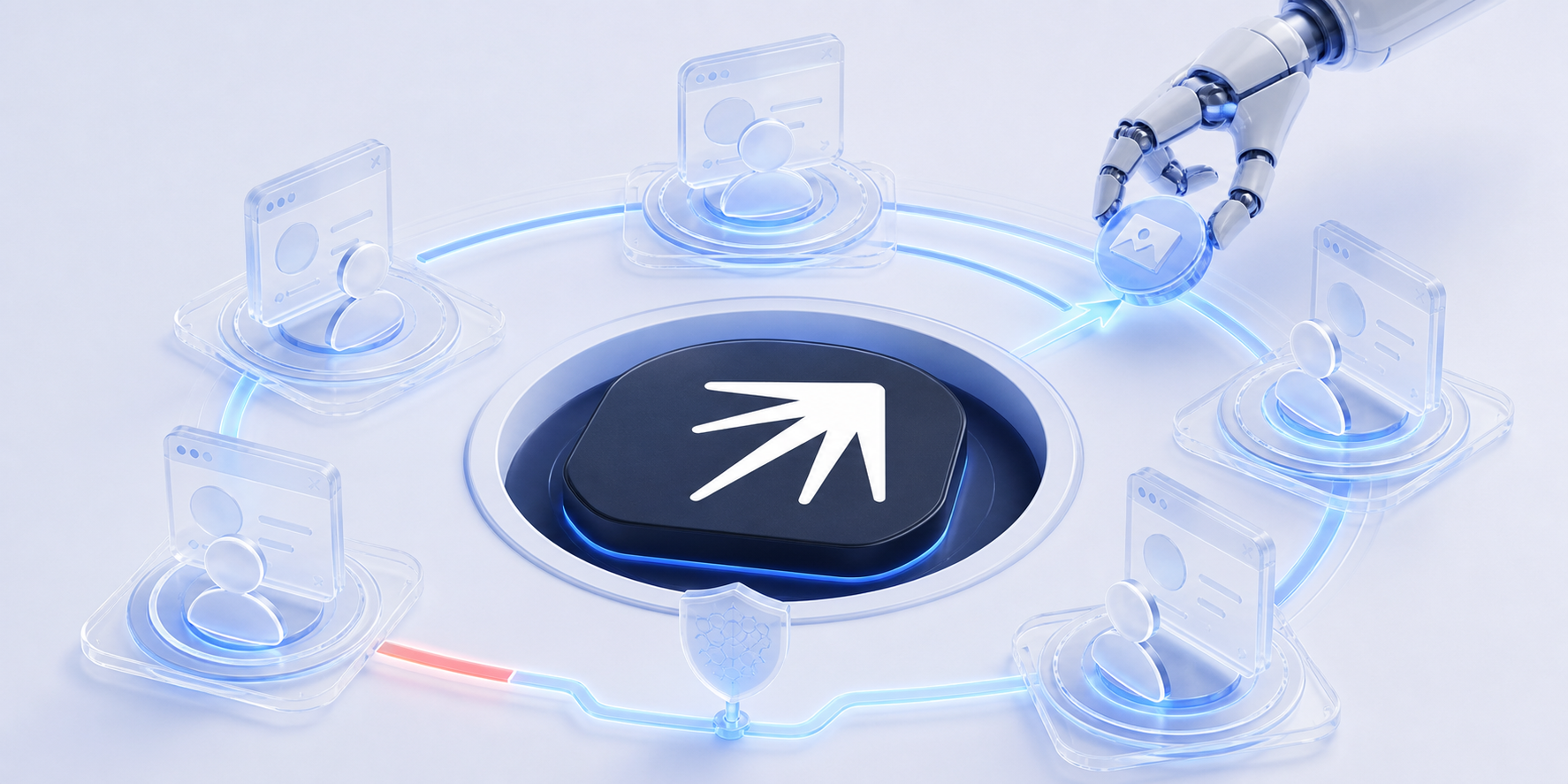
You manage 20 Instagram accounts, 15 Reddit profiles, a dozen LinkedIn pages. Every morning you check which posts went out, which accounts got flagged, which tools broke overnight. You are the orchestration layer. What if AI agents handled all of it while you chilled?
An AI social media manager uses autonomous agents, not just scheduling tools, to post, engage, warm up accounts and respond to messages across dozens of profiles simultaneously. The best setups combine AI agents with anti-detect browser profiles and proxy rotation so platforms see human-like activity, not automation patterns.
What "AI Social Media Manager" Actually Means in 2026
Not every tool calling itself an "AI social media manager" is doing the same thing. There are three tiers:
- AI-assisted schedulers you drive, AI helps with captions and timing
- AI workflow tools AI generates content, you approve and post
- AI agents AI operates your accounts autonomously: logs in, scrolls, posts, engages, responds
Most tools on the market are tier 1 or 2. They bolt an LLM onto a scheduling calendar and call it "AI-powered." Real AI agents navigate devices, interact with the actual platform UI and make decisions on the fly. The jump from tier 2 to tier 3 is the difference between autocomplete and autopilot. Some tier 3 tools like Nextbrowser also support human-in-the-loop workflows, letting you review and approve key decisions for the best results.
Why Schedulers Break Above 10 Accounts
API-based tools use official platform APIs. That means rate limits, per-account authentication, expensive API fees and zero stealth. Platforms detect coordinated behavior across accounts sharing the same API credentials, IP or device fingerprint.
73% of marketers say posting consistently across platforms is their biggest challenge. Beyond 10 to 15 accounts, quality degrades: posts become generic, comments go unanswered, analytics go unreviewed. Most marketers start by searching for free social media automation tools but quickly discover that free scheduling tiers cap out well before real scale begins.
For multi-account operations, you need accounts to look independent. Different IPs, different browser fingerprints, different behavioral patterns. Schedulers don't solve this. They are designed for legitimate single-brand management.
How AI Agents Actually Run Social Media Accounts
Device agents log into each account inside its own anti-detect profile with a tailored fingerprint, dedicated proxy and separate cookies.
The agent navigates the real UI: scrolls the feed, reads posts, writes contextual comments, sends DMs, follows relevant accounts. Unlike API-based posting, this looks identical to organic activity.
Each account maintains its own behavioral rhythm: active hours, scrolling patterns with slight randomization, engagement style. The agent adapts. If engagement drops, it adjusts posting frequency. If a comment gets flagged, it changes tone.
A practical example: an AI agent managing a Reddit account browses subreddits, reads threads, writes relevant comments and upvotes related content, all with natural timing and pauses.
What Happens When Your Automation Breaks
Single-tool setups have one point of failure. Tool breaks, accounts stop, you fix it manually in the morning.
The common failures:
- Proxy expires at midnight and all posts scheduled for overnight fail
- Browser fingerprint gets flagged and every account using that browser is now at risk
- AI agent hits a CAPTCHA it can't solve and the workflow stalls
The fix is orchestration with fallback chains. When one browser engine gets blocked, auto-switch to another. When a proxy times out, rotate to backup. When one AI model hallucinates, try a different model.
Nextbrowser's Solution Memory takes this further: the system remembers which tool combinations work for each platform and task, getting better over time. It is the open-source AI agent orchestrator harness that turns your existing browsers, devices, proxies and AI agents into one self-healing automation system.
What to Look for in an AI Social Media Manager
Multi-account isolation
- Each account runs in its own browser profile with a unique fingerprint
- Dedicated proxy per profile (residential or mobile preferred)
- Separate cookies, storage and cache with no data leakage between accounts
Autonomous operation
- Agents that navigate real browser UIs, not just API calls
- Contextual engagement: reading threads before commenting, not just posting into the void
- Natural behavioral patterns: random delays, scroll pauses, typing speed variation
Self-healing automation
- Automatic fallback when tools break
- Retry with different tool combinations
- Learning which approaches work for each platform
Cost at scale
| Feature | API Schedulers | Browser Agents | Orchestration Harness |
|---|---|---|---|
| Multi-account stealth | No | Partial | Yes |
| Platform UI interaction | No (API only) | Yes | Yes |
| Self-healing fallback | No | No | Yes |
| Anti-detect profiles | No | Some | Yes |
| Open source / free tier | Rare | Some | Nextbrowser (AGPL-3.0, $0) |
| Scale ceiling | 10-15 accounts | 20 accounts | 25-500+ accounts |
FAQ
Can AI fully replace a human social media manager?
Not today. AI agents handle execution: posting, engaging, warming up accounts, responding to routine messages. Strategy, creative direction, crisis response and brand voice still need a human. Think of AI agents as a team of junior employees that follow your playbook 24/7.
Is it safe to let AI agents manage social media accounts?
Safety depends on how the agent operates. API-based tools are low-risk but limited. Browser agents need proper isolation: unique fingerprints, dedicated proxies and natural behavior. Without isolation, platforms detect coordinated activity and ban accounts.
How many accounts can an AI agent manage?
With proper anti-detect profiles and proxy rotation, AI agents can manage 20+ accounts simultaneously. The bottleneck is not the agent but the infrastructure: each account needs its own fingerprint, proxy and behavioral profile. Orchestration harnesses manage this automatically.
What is the difference between a social media scheduler and an AI agent?
A scheduler queues posts via API and publishes them at set times. An AI agent logs into the actual platform, navigates the UI, reads context and makes decisions. Schedulers are cruise control. AI agents are self-driving.
Try Nextbrowser
- Download and install: GitHub Releases (Mac, Windows, Linux)
- Star the repo: nextbrowser-oss/nextbrowser-app
- Join the community: Discord
See the workflow in action
Watch a recorded task and follow the written guide.
Browse all demos → Nextbrowser TeamHow to Manage Multiple Instagram Accounts and Grow Them AllLearn how to manage multiple Instagram accounts without getting banned or burning out emotionally. Covers native limits, tool tiers and how AI agents scale account growth to 50+ profiles.
 Nextbrowser TeamMulti-Account Social Media Management: The Complete GuideA practical guide to managing multiple social media accounts safely and at scale. Covers account isolation, warm-up routines, AI automation and the three-layer stack that keeps accounts alive.
 Nextbrowser TeamFree Social Media Automation Tools That Actually WorkMost free social media automation tools are just free trials. Here are the ones that are genuinely free, what they actually include and where they fall short.